
Dr. George Pappas, M.D., Ph.D. is a Stanford and Harvard trained sports medicine specialist who treats injuries of the shoulder, hip, and knee. He performs advanced surgeries such as minimally-invasive hip arthroscopy for labral repair and reconstruction, rotator cuff repair, and ACL reconstruction. If you are seeking help for hip, shoulder, or knee injuries, schedule an appointment with Dr. Pappas today. Learn how we can help you with your knee replacement or shoulder injury in Charleston, SC.
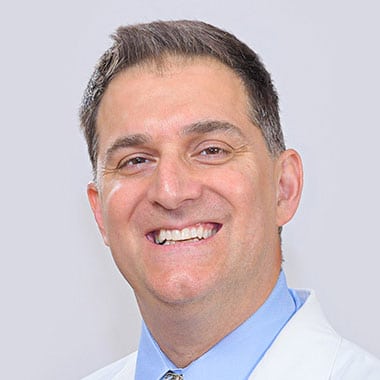
Dr. George Pappas, M.D., Ph.D. is a Stanford and Harvard trained sports medicine specialist who treats injuries of the shoulder, hip, and knee. He performs advanced surgeries such as minimally-invasive hip arthroscopy for labral repair and reconstruction, rotator cuff repair, and ACL reconstruction. If you are seeking help for hip, shoulder, or knee injuries, schedule an appointment with Dr. Pappas today. Learn how we can help you with your knee replacement or shoulder injury in Charleston, SC.
Before going into Orthopaedic medicine, Dr. Pappas’ earned a doctorate in Biomechanical Engineering and received a highly qualified applicant rating for the NASA Astronaut Program. He has earned many honors throughout his education and career including a national merit scholarship; Tau Beta Pi Engineering Honor Society; Sigma Gamma Tau Aerospace Engineering Honor Society; an Air Force Research in Aero Propulsion Technology (AFRAPT) Fellowship; a NASA Graduate Student Researchers Program (GSRP) Fellowship; a National Institutes of Health (NIH) Biotechnology Fellowship at Stanford; and Stanford University Medical Scholars Research Fellowships.
While in his sports medicine fellowship at Stanford, Dr. Pappas provided care for members of the Stanford football team. His interest in sports medicine led him to join the South Carolina Sports Medicine & Orthopaedic Center, which is renowned for having some of the top surgeons in the country. He is currently involved in the study, Analysis of Shoulder Impingement, here.
“Magnetic Resonance Imaging of Asymptomatic Knees in Collegiate Basketball Players: The Effect of One Season of Play,” Clinical Journal of Sports Medicine, 2016 (Co-authors: Vogelsong M, Staroswiecki E, Gold GE, Safran MR)
“Injury in a High School Football Player: Role for Limited Exam?” American Medical Society for Sports Medicine, 2014 (Co-authors: Stroud J, DeCastro A, Carek P, Hulvey J, Kupferman S)
“Hip Injuries in the Athlete, Orthopaedic Sports Medicine: Principles and Practice,” Springer, 2011. (Co-author: Safran MR; Editors: Margheritini and Rossi)
“Virtual Reality Simulation for Shoulder Arthroscopy – A Three-Year Follow-up Study of Individual Skill Progression,” The Orthopaedic Journal at Harvard Medical School (Co-authors: Gomoll AH, Forsythe B, Warner JJP)
“Individual Skill Progression on a Virtual Reality Simulator for Shoulder Arthroscopy – A 3-Year Follow-up Study,” American Journal of Sports Medicine, 2008 (Co-authors: Gomoll AH, Forsythe B, Warner JJ)
“Abduction and External Rotation in Shoulder Impingement: An Open MRI Study on Healthy Volunteers – Initial Experience,” Radiology, 2007. (Co-authors: Gold GE, Blemker, SS, Whalen ST, Campbell G, McAdams T, Beaulieu CF)
“Three-Dimensional Anatomy of the Neer and Hawkins Signs for Shoulder Impingement,” Journal of Shoulder and Elbow Surgery, 2006. (Co-authors: Blemker SS, Beaulieu CF, McAdams TR, Whalen ST, Gold GE)
“Cine Phase-Contrast Magnetic Resonance Imaging As a Tool for Quantification of Skeletal Muscle Motion,” Seminars in Musculoskeletal Radiology, 2003. (Co-authors: Asakawa DS, Blemker SS, Drace JE, Delp SL)
“Aponeurosis Length and Fascicle Insertion Angles of the Biceps Brachii,” Journal of Mechanics in Medicine and Biology, 2002. (Co-authors: Asakawa DS, Delp SL, Drace JE)
“Non-Uniform Shortening in the Biceps Brachii During Elbow Flexion,” Journal of Applied Physiology, 2002. (Co-authors: Asakawa DS, Delp SL, Zajac FE, Drace JE)
“Imaging of Skeletal Muscle Function Using 18 FDG PET: Force Production, Activation, and Metabolism,” Journal of Applied Physiology, 2001. (Co-authors: Olcott EW, Drace JE)
“In Vivo Measures of Musculoskeletal Dynamics Using Cine Phase Contrast Magnetic Resonance Imaging,” Skeletal Muscle Mechanics, 2000 (Co-authors: Sheehan FT, Drace JE; Editor W. Herzog)
“Pulse Detonation Engine Theory and Concepts,” Developments in High-Speed Vehicle Propulsion Systems. (Editors: S.B.N. Murthy and E.T. Curran)
“Progress in Astronautics and Aeronautics Series,” American Institute of Aeronautics and Astronautics, Inc., 1996. (Co-author: Bussing T)
“An Introduction to Pulse Detonation Engines, The American Institute of Aeronautics, 32nd Aerospace Sciences Meeting and Exhibit Paper, 1994 (Co-author: Bussing T)
“The Influence of Non-Uniform Spanwise Inlet Temperature on Turbine Rotor Heat Transfer,” NASA, AGARD Heat Transfer and Cooling in Gas Turbines (Co-authors: Guenette GR, Epstein AH)
“AGARD Heat Transfer and Cooling in Gas Turbines,” Conference Paper, 1992